
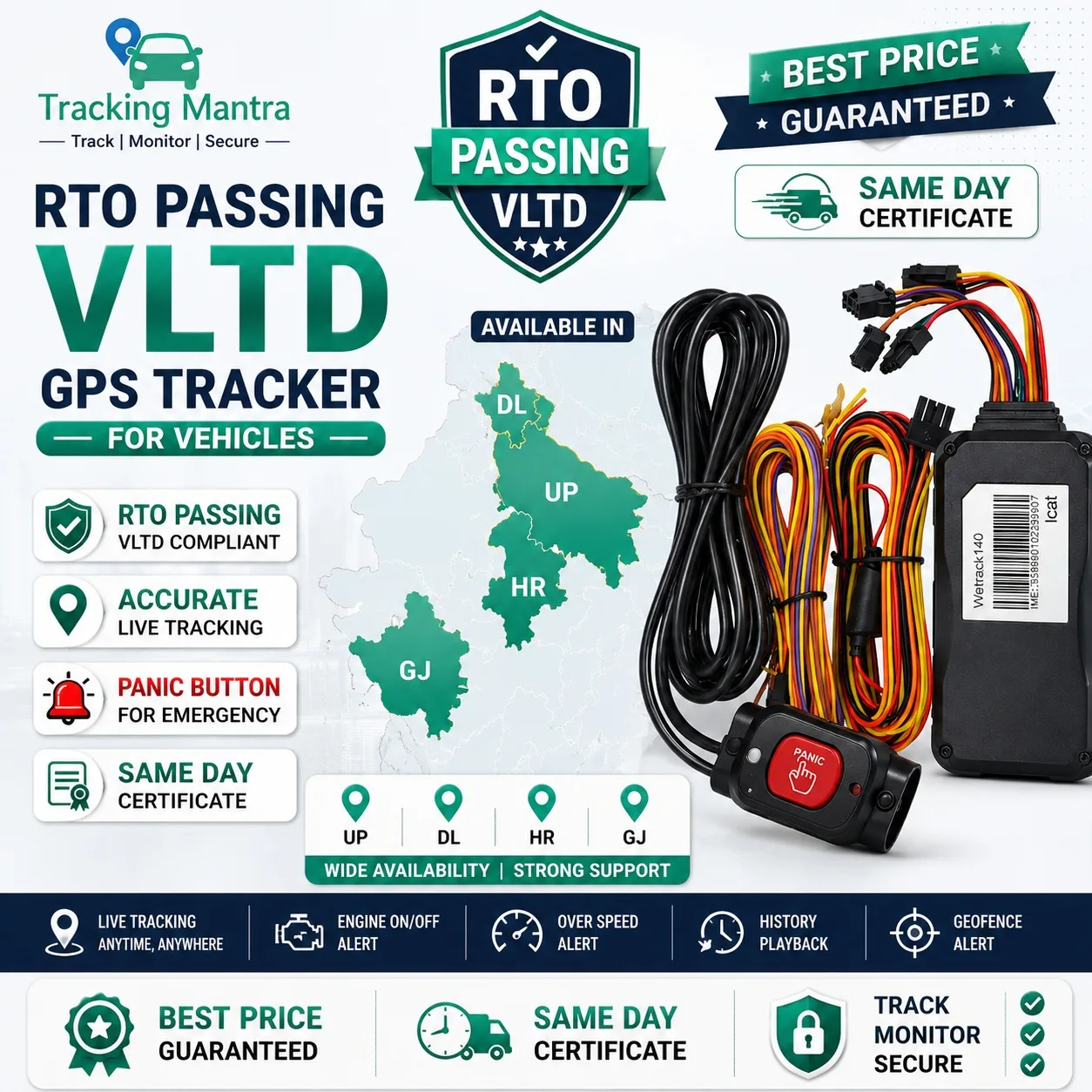
AIS 140 GPS Tracker for Commercial Vehicles
An AIS 140 GPS tracker is a Vehicle Location Tracking Device (VLTD) designed to meet applicable AIS-140 requirements when the exact device model is duly tested, approved and configured for the relevant vehicle and state backend. AIS-140 is not simply a label for any ordinary GPS tracker. Vehicle owners should verify model approval, vehicle category and the applicable transport authority process before purchase.
What does an AIS 140 VLTD do?
A compatible VLTD sends vehicle location and device information to the relevant backend through cellular connectivity. Depending on the approved configuration and services enabled, the system may support location monitoring, device health reporting, overspeed alerts and emergency-button alerts integrated with the applicable State/UT monitoring centre.
Which vehicles may need an AIS 140 device?
Rule 125H and related notifications cover specified public service vehicle categories, subject to exclusions and amendments. The MoRTH VAHAN SOP describes fitment and activation for specified public service vehicles and notes exclusions such as two-wheelers, e-rickshaws, three-wheelers and transport vehicles for which no permit is required under the Motor Vehicles Act. Separate notifications may cover other vehicle classes, including certain vehicles carrying dangerous or hazardous goods. Always check the latest central notification, state implementation and vehicle permit/category rather than relying on a general list.
Device approval and vehicle compatibility
Do not assume that one device is suitable for every bus, taxi, truck, school vehicle or goods carrier. Confirm the exact make/model, Type Approval Certificate (TAC), current Conformity of Production (CoP) status where applicable, vehicle class, registration state and compatibility with the required backend. An AIS-140 label alone is not proof that a particular unit is currently accepted for a particular vehicle or state programme.
Installation, registration and activation
- Confirm the vehicle category, permit and state transport authority requirements.
- Verify the exact VLTD model’s approval and applicable CoP status.
- Arrange installation through the manufacturer or authorised dealer as required by the applicable process.
- Ensure device and vehicle details are uploaded and linked in VAHAN or the relevant State Registration Application/backend.
- Complete backend testing, activation and any required emergency-button/functional checks.
- Obtain the installation/activation report or fitment certificate and check that the device is communicating correctly.
For more detail, read our VLTD installation and registration guide. The precise workflow can differ for new and existing vehicles and between state systems. Follow the current instructions of the relevant RTO/State Monitoring Centre.
Vehicle-specific AIS-140 information
For bus operators, see our guide to AIS-140 devices for buses and commercial vehicles. Owners of Force Traveller and Eicher vehicles can use our vehicle compatibility checklist. These guides explain what to verify; they do not imply that every model or registration category has identical requirements.
Features to check before ordering
- Exact model approval and vehicle-class applicability
- Cellular connectivity and network support
- Device health reporting and backend integration
- Emergency button and alert interface where required
- Installation, activation and documentation support
- SIM/service validity, renewal terms and after-sales support
Explore Tracking Mantra products and services
Explore our AIS 140 GPS tracker product, truck GPS tracker information and bus GPS tracker information. For a vehicle-specific enquiry, contact Tracking Mantra with the vehicle type, make, model, registration state and permit category.
Frequently asked questions
Is every GPS tracker an AIS-140 device?
No. AIS-140 applies to devices meeting the relevant standard and approval process. Check the exact model’s current documentation.
Does every commercial vehicle need an AIS-140 VLTD?
No single statement applies to every commercial vehicle. Applicability depends on vehicle class, permit, central notifications and state rules.
Can I install any AIS-140-labelled device?
Verify the model, approval, backend acceptance and registration-state requirements before installation.
What documents should I receive?
Ask the authorised provider for model approval details and the applicable installation/activation report or fitment certificate. Confirm the exact documents required with your RTO.
Where can I find answers to more RTO questions?
See our AIS-140 and RTO compliance FAQs.
Official references
- MoRTH SOP for VLT registration and activation in VAHAN
- AIS-140 Amendment No. 2
- Parivahan VLT & Emergency Alert System
Note: This guide is general information, not legal advice. Rules and state implementation may change. Confirm current applicability with the relevant transport authority before purchasing or fitting a device.